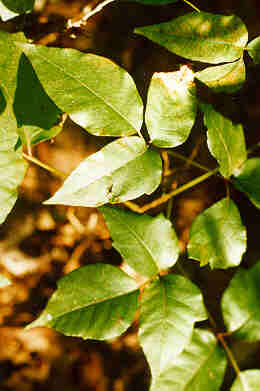
Poison Ivy is a common native plant in the Washington, DC and throughout the mid-Atlantic area. It has 3 leaves per leaflet on alternate sides of the stem (see photo at right). It can be an upright stick or bush, a shrub or climbing vine. Leaves are green, red or yellow (autumn), and it develops clusters of small berries which birds just love to eat and poop to start new plants everywhere.
Poison Ivy, Poison Oak and Poison Sumac contain a poisonous, oily irritant called urushiol. This oil is found on the plant's stem, roots, branches, and leaves. The urushiols chemically bond to skin proteins within 20 minutes after exposure to the plants (including dormant plants or long-dead prunings), contaminated clothes or tools, or even contaminated pets.
Contact with this annoying oil produces a rash in three out of four people. The rash can begin within a few hours after contact, or it can start three to five days later. The rash starts with itchiness and swelling, followed by a reddish inflammation of tiny pimples. Blisters then form and then couple in a chain-like reaction. This fluid then hardens to a yellowish crust. Left untreated, the rash (a typical histamine response) will last three to five weeks.